The lowly like

Don’t disparage the “like,” “favorite,” or other social media element that let’s me acknowledge you. Yes, as a means of communication, it is a dust mote in the shadow of a hug; but it still works – it still let’s you know that yes, I’m here, I see you.  And isn’t that, at the end of the day, what we people so very much need?

It’s been suggested that even chemical or photosensitive reactions can be considered a form of consciousness.

If we accept Chalmer’s assertion, and the whole notion of panpsychism that he discusses, then we can accept that these social media triggers and reactions can be seen as extensions of consciousness.

The British illustrator, John Holcroft, has captured a common sentiment about social media; it’s a place where the gathering of likes is about feeding our ego.

Holcroft is sharing a common sentiment; a form of backlash against the nose-to-the-mobile social media addicted society that ours has become. But even before social media, we complained about the depths of relationships – that very often, many of our social transactions were shallow.

They are. Yes; and they’re still important.

Even the nod of recognition you receive from an acquaintance as you walk down the street can communicate a connectedness that in the absence of that nod would be missed.

British psychologist Robin Dunbar famously asserted that gossip is a form of social grooming, and that those activities help create bonds between members of a group; that those members would be more likely to come to one another’s defense when attacked by a predator.

Of course, we who are at this historical juncture of social media – the first wave of users – suffer the most.  We over-do it.  The pendulum swings the other way; we post illustrations like those of Holcroft, and suggest device-free events and digital Sabbaths. I’m sure the next generation won’t suffer in the same ways that ours has.

But meanwhile, it might pay to see beyond the pendulum-swinging zeitgeist; see to the underlying patterns at play. Even those thousands of micro-transactions that occur in social media have a power beyond that of our own ego stroking. We’re connecting.

Artist Warrior

Being an artist can be challenging. A lot of life shit can get in the way; the need to make money, put bread on the table, gas in the tank, and such. And then there’s just the human penchant for distraction, which some of us have more than others. All sorts of people are afflicted with all sorts of different habits, norms, and mind tics.

Taking on a warrior mindset can help. By that, I don’t mean the violent side of warriorhood; but the determined, tactical, and strategic side. It will mean being ruthless about some things.

Once, an Asian conductor in one of Seiiji Ozawa’s master classes was going through a particularly emotional and difficult time. After some discussion, Ozawa said something to the effect of, Sometimes, you just need to be strong.

Warrior mode means you’re going to make some life decisions that put you in a better place for making art. The decision process of, “will this further me along in making art?” becomes a heuristic – a decision-making tool.

So what might it mean for the artist?

Setup life so that you have fewer needs and distractions. That’s challenging in US culture, today. And it’s only getting more so. In the 1940’s and 50’s, artists had apartments in New York City’s Union Square – Pollock was there, as well as Rothko and the DeKoonings. Rents were about $20-50 per month – which was a lot of money back then. But it’s not as much money as an apartment in Bushwick is today in today’s money. Back then, if you were tight on rent, you could throw a rent party, invite all your friends, and the small contributions would be enough to get you through. Today, that just wouldn’t work; the numbers are much higher.

Outside of the urban areas, transportation can be challenging; here, you need a car. And the second you need a car, you need gas, insurance, maintenance, not to mention the cost of a car. Where can you go where you wouldn’t need a car?

Really, watch the stuff you buy. Things need care and attention. Even if once a year you move it from this spot to another. If it feeds your mind, great – if not, reconsider.

Some organization

A lot of artists lack organizational skills; they relish the chaos. In warrior mode, you identify your big overall goal, and keep that in your mind’s eye as you encounter the various impediments to getting there. You adjust, and readjust, and keep moving closer.

Your tribe

Isolation is unhealthy. The use of isolation in prisons has been deemed cruel and inhumane. It’s in our DNA – our species needs the touch and feel and voices of others. If you’re in the middle of a conservative village, you might have family, and old friends nearby. But you also might not have people who “get you.” You need that being understood, perhaps more than anything. Not a lot – just some. Find the people who understand you to some extent, and stay in touch.

We need community. It doesn’t mean you have to hang out at a Cedar Tavern every night getting sloshed – often, even a “hello” on the sidewalk is nourishment enough for a day. Other times, yes, you’ll need those conversations.

If you’re not in a community, find one. Or make one.

Polishing the sword

If the artist lacks energy, or is ill, she can’t make art. You’ve got to take care of yourself. That means eating well and exercising. If you haven’t developed those habits, try them on for size, and keep a journal. It’s very likely you’ll find that your concentration and energy improves.

We love our art supplies. We go to art supply stores and drool, and buy new paper and sketchbooks, and paint. You are your most important art supply. Without you, none of that stuff is ever going to get made.

Ink on Mulberry

I’d almost forgotten how it came to be that I’ve been making these large collages of ink on mulberry paper. Edom Hernandez had gifted me a fairly large stack of the paper before he died.  The ream sat in my studio unused for many years, occupying its own drawer in the flat files.

Edom had been a close friend. His antique store in the Catskill Mountains was filled with interesting objects that often reflected his own refined tastes and interests.  I, myself, spent a portion of those years buying and selling antiques, so when we weren’t at an auction or at yard sales, we often chatted for hours, and babysat Edom’s shop.

There is nothing quite like having a lot of quality materials to use for art making.  If the materials are too precious, it can be inhibiting, while having a robust supply can help you get in that state of mind where making mistakes and being ridiculous can happen – important states of mind for the artist. Sometimes we require plentitude in order to take chances.

The stack of paper, once I started using it, did allow me to make mistakes and ridiculousness. The result was a few decent drawings, and even more rejects. I then started playing with assembling the “mistakes” into new pieces; and before long, I’d started making these large ink collages.

The paper lends itself to collage; when watered-down glue is brushed on, it soaks in and helps the paper adhere to the underlying paper.

Right now, making large-scale paintings isn’t practical for me, so this is a nice way to work large, and to be thinking of the paintings to come. It’s gratifying.

Jen Dragon stopped by the other day, looked up at this piece, and said, “oh, a deposition.” Jen’s seen a lot of my work over the years, and is pretty in tune with my sensibilities. The scene of the deposition was a classic theme in the history of art; it’s the moment in which Christ is being taken down from the cross.  It often shows Christ’s outstretched body being supported by a group of other figures, creating a sort of diagonal repose with the tension given by supporting hands and arms.

Jorge Jaramillo, a neighbor and acquaintance, died this past week. Jorge had been a dear friend to another friend of mine, and it reminded me of my friendship with Edom. “Dear friend” isn’t quite the word when two people have that special bond of good and frequent friendship – and it isn’t as common, perhaps, amongst men.  So, perhaps, a deposition – an end to suffering that leads to the burial – is very much present.

These thoughts all weave in and out, not unlike a collage, too; old friends, dying, making art. Sometimes newer thoughts obscure older; still present and sometimes more powerful for their semi-obscurity.

Note to a mime

Pantomime thief, music box angel,
mask of a face.
Lips wore red.

with too-small wings
you dance the buds on the tips of trees, branches
pirouette

Through subways, with screeching iron and popping sparks

finally caught up with her, cornered.
in the pavement where the
Blackened bubblegum splotches
a more tender moment

Tumblekisses

When I do finally lay my head down, close my eyes, I see you
looking downward, quietly, lips
suddenly forming a broad smile.
I kiss you, and close my eyes again, and fall asleep.

Kiss. Close eyes. Fall asleep.
There are the light, new kisses, tentative
in both the giving and the receiving, perhaps softly
at first on hands, then lips,
asking, inquiring, is this my place?

There is the kiss, deep, where our faces
not only reflect one another, but where governing powers
eradicate all boundaries, removed
all obstacles, and tongues dance and caress
and we cospire, breaths encoupled.

In dreams I open my eyes and kiss you,
and in my dreams, fall asleep again. Over and over,
a tumble of kisses rolling across the rose-lit landscape of sleep, uncatchable.

Semiotic Pie

This first appeared in the DragonSearch Blog in January 2014

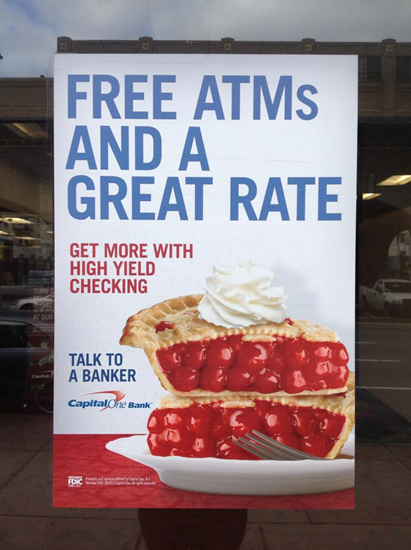
Friend and marketer Ty Sullivan questioned the relevancy of this Capital One ad. He suggested there was marketing disconnect. I, on the other hand, think the ad is, if not the work of an advertising genius, pretty clever.

Capital One Bank advertising featured two slices of cherry pie.

There’s quite a bit to address here in terms of semiotics. This isn’t just an ordinary slice of pie – it’s an ordinary slice of pie. Actually, two of them, stacked. With whipped cream on top.

Did you play that game as a child: “pretty please,” and then “pretty please with whipped cream on top?” And everyone “deserves a slice of the pie,” which speaks to a sense of entitlement and enfranchisement. Free. Like “America the land of the free,” because you shouldn’t have to pay for ATMs, and aren’t you feeling indignant?

Here, mama has a slice of pie for you: the bank as mother. And get MORE! Life is a bowl of cherries.

American Pie – the archetypal adolescent movie, where the hero was caught masturbating with a pie, because he was told that getting to third base felt like that. Cherries, as the symbol of virginity, while three of the fruits lined up signify great winnings at the casino. It’s not a coincidence that the myth goes that George Washington chopped down a cherry tree.

In the flash of a second that a passerby takes in the image, does the ad enhance their life, or does it require too much of an emotional investment? Does it add aesthetic value to the landscape, or is it an unwelcome intrusion that disrupts the thinking of the day. Clearly, for the marketer, if the audience associates all of the warm, wonderful emotions with the brand, it could be a win. On the other hand, more and more people have learned to avert their glances from pastries and candy; they are simply trying to be healthier.


photo courtesy of Ty Sullivan

Lyre Lips

Whistling, splashing, humming
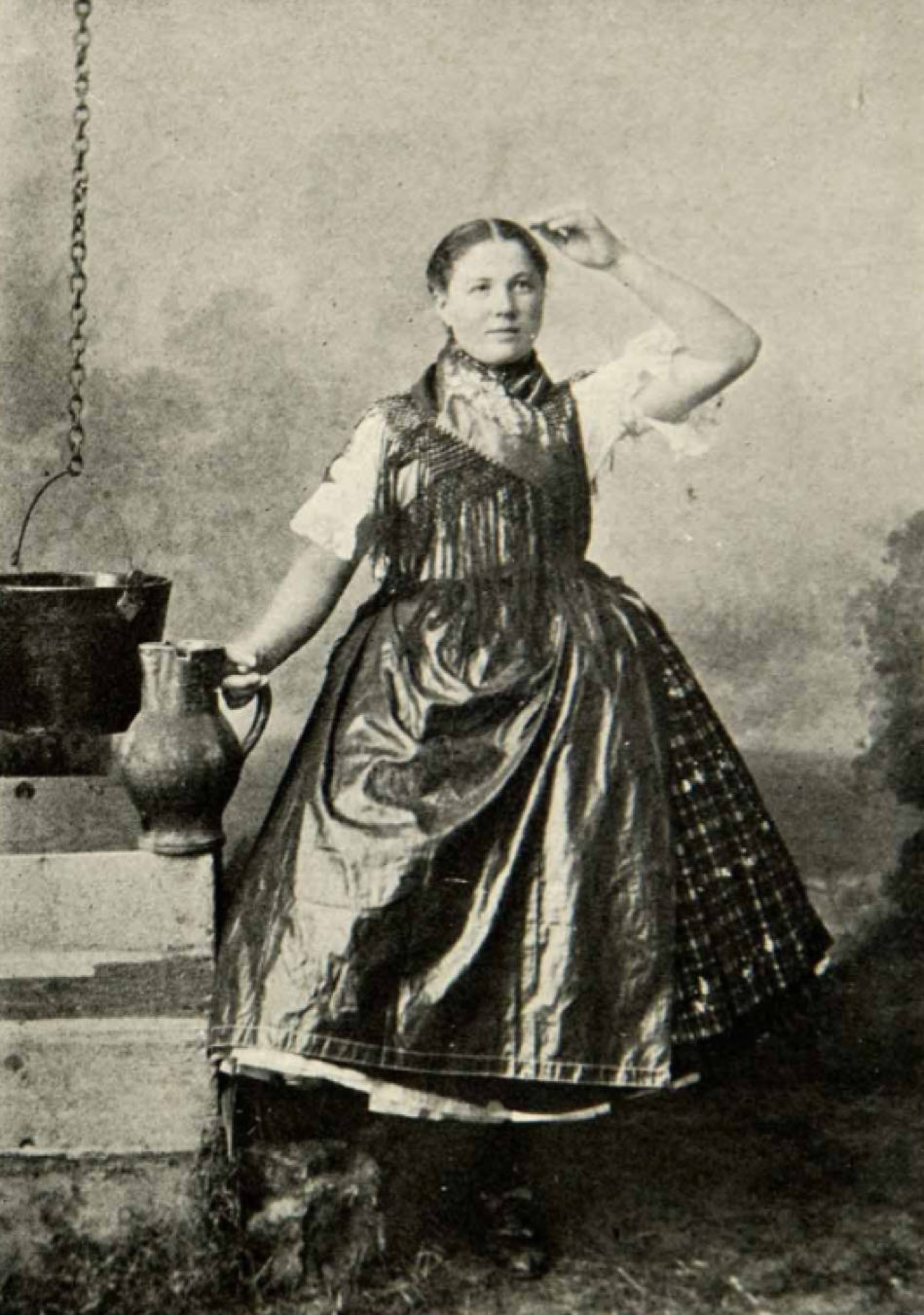
I can hear from your Magyar lyre lips,
Russet harmonics, melody, rhythms,
tambourine jingle rattle swap.
Gypsy waist engirdles words of desire
murmuring awake slumbering crumbled clay.
Pomegranate drips, ripened pears, baskets
Woven from reeds encircled and touched upon by bees.

Africa Antibiotica

I’m fairly adept with languages, but hardly thorough. I can learn a lot of words, some grammar, and then the language will swim about in my head, frothing the waters like a school of desperate mullet. At times, my brain can provide the mot juste, at others, nothing more than a fluttering aphasia beyond the tip of the tongue. Hearing a speaker of another language on the street can trigger a whirlwind; a sort of Manchurian Candidate response in which my mind struggles to go into the mode of that language even if it can’t.  I joke that my language skills are enough to get me into trouble, but never back out; it’s not that witty of a joke. Continue reading “Africa Antibiotica”

Social Media as Trend

Originally published in Trends Journal, October 2013

We’ve always had social media. Sitting around a campfire telling stories is fundamentally social, with the air around our heads being the medium, populated by human voices. Sixteenth Century denizens of Florence and Rome were known to tie notes to sculptures expressing their approval or criticism in what were, perhaps, some of the earliest bulletin boards. Even the paintings found in the bowels of Lascaux appear to have been the products of gatherings, not the efforts of lone individuals.

The British psychologist Robin Dunbar suggested that chatter, gossip, and even conversation are human extensions of social grooming. All mammals engage is social grooming of some form – licking, picking nits, smoothing the furrowed brows on one another’s forehead. It’s interesting to note that social grooming has been associated with an increase of the neurotransmitter dopamine – the chemical associated with a feeling of well-being, and one known to be increased not only in social grooming, but in gambling, sex, and even in the use of social media. It’s often associated with addictive behaviors.

The addictiveness of social media is a noted facet of the technologies that have emerged in the past decade. There are behaviors that, if not born in social media, certainly have become more ubiquitous. Social platforms encourage curation, sharing, micro-gifting, and even game behaviors. The very fact that people can connect more often with a broader network of others allows these new behaviors to happen in a way that could not in the absence of such networks.

If you simply look at all of the social media platforms, you can easily be overwhelmed by all of the features that are being introduced. The rate of innovation is incredibly fast. Instead, you can look at the platforms in terms of their design patterns. The idea of design patterns originated in architecture and urban planning, and was then used extensively in software design. For instance, the typical ecommerce checkout page follows a pattern that most of us find completely familiar. One of the success factors of Facebook was the ease in which it allow its users to create photo albums, a design pattern that Facebook helped create. Pinterest has extended that pattern, and allows for an even richer experience in saving and sharing images. Other social interactions are more commonplace, and almost universal across social platforms, like the act of signifying approval of something. These “likes,” “plusses,” and “favorites” can be seen as micro-gifts; after all, the recipient frequently says, “thank you.”

It’s not surprising that Google in creating Google Plus has made the move to have a social platform that competes with Facebook. With each keystroke, users of social media are freely adding data to some of the largest databases ever created. The owner of that data will have the capacity to predict consumer behavior in ways that have, in the absence of that data, been unimaginable. Furthermore, both Facebook and Google have designed systems in which data from applications outside of their platforms are also adding data. For instance, when a Facebook user plays a song on Spotify or watches a movie on Netflix, that information flows into the Facebook data collection.

While the US has been behind in the adoption of mobile and smartphone technology, it’s quickly catching up. Wearable devices, such as Google Glass and smart watches, are only beginning to become commonplace, and are predicted to proliferate as the cost of MEMS sensors continues to decrease. Google’s emphasis on the development of wearable devices and social media is prescient: they’re creating an always-connected device recording every motion feeding a database of human interactions.

While the battle between social data ubiquity between Google and Facebook may seem like the giant final battle scene in the Lord of the Rings, they are not the only players. LinkedIn, the oldest of the major social platforms, has been undergoing dramatic overhauls of their system, creating a social eco-system that ties in with the way people conduct business. In younger aged populations, platforms like Tumblr, a platform recently acquired by Yahoo! and Instagram are becoming more popular than Facebook.

The adoption rate of Internet and social media usage has recently slowed, with overall US use of social media by internet users around 70%. The so-called Millennials and the following generation, however, were born into these technologies, and their usage rate is closer to 90% [http://pewinternet.org/Commentary/2012/March/Pew-Internet-Social-Networking-full-detail.aspx]. The increase of smart phones and wearable devices will bring those numbers up even higher. We are approaching a time when less than 10% of the population is not using social media in some form or another.

In marketing, smart companies are eschewing traditional norms of advertising, and embracing passion or purpose-centered communication plans. New approaches are based on storytelling, participatory media, and transmedia, and less about self-promotion. In the era of social media, audiences or customers aren’t interested in anything that can be perceived as salesmanship, thus companies are having to scramble to become creators of original and valuable content: brands are becoming publishers.

Social media and the Internet technologies that have enabled them constitute the largest disruptions to business communications since the invention of the Gutenberg press. These new technologies are bringing with them whole new approaches to the creation of value, and completely transforming the relationship of the creators of goods and services with those who consume them.